

The Story Behind TILT
It has taken around 8 years from the first concept to where it is today, but each stage has helped shape the lamp into what it has become. And in many ways, it still feels like the beginning.
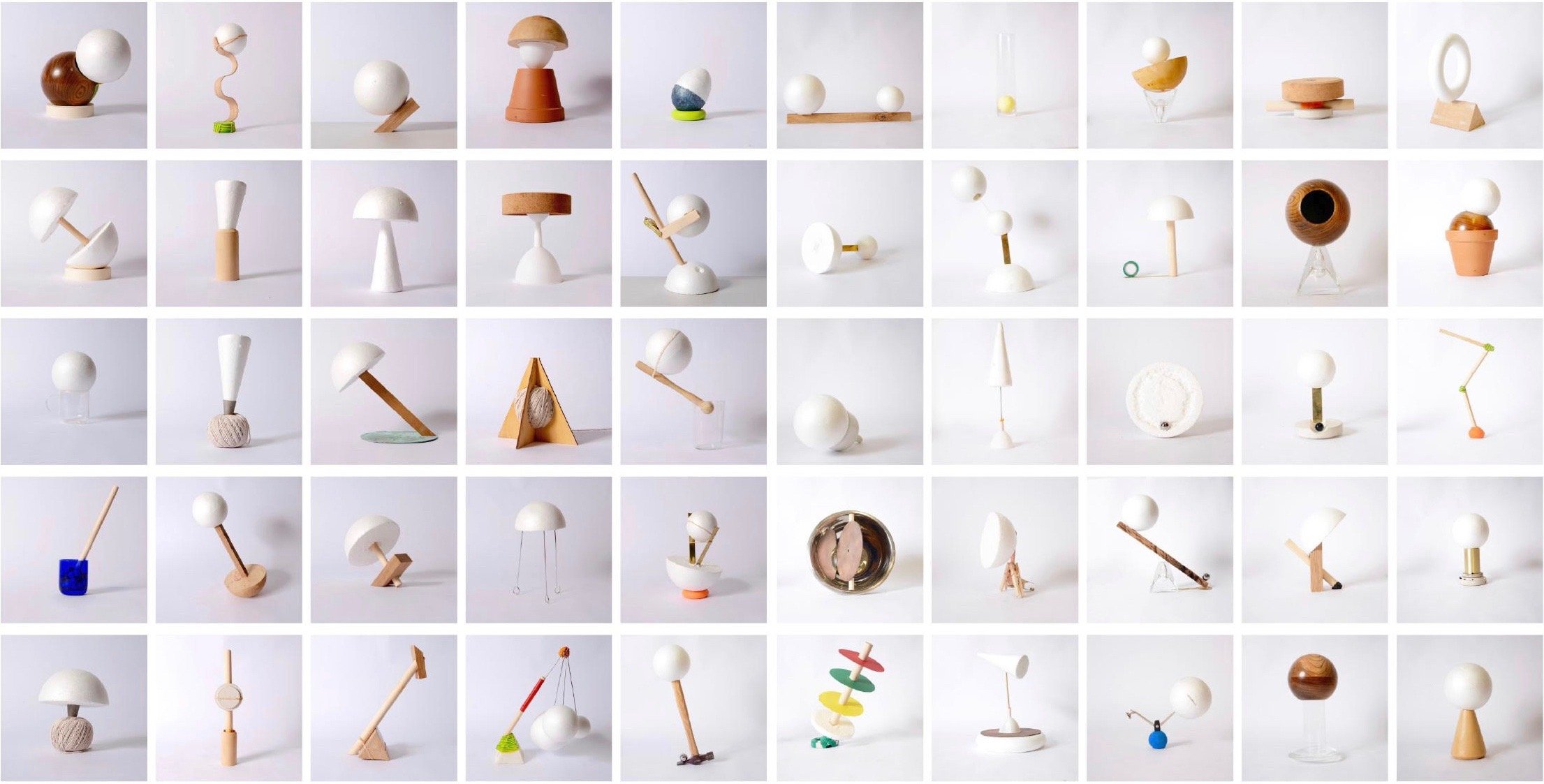
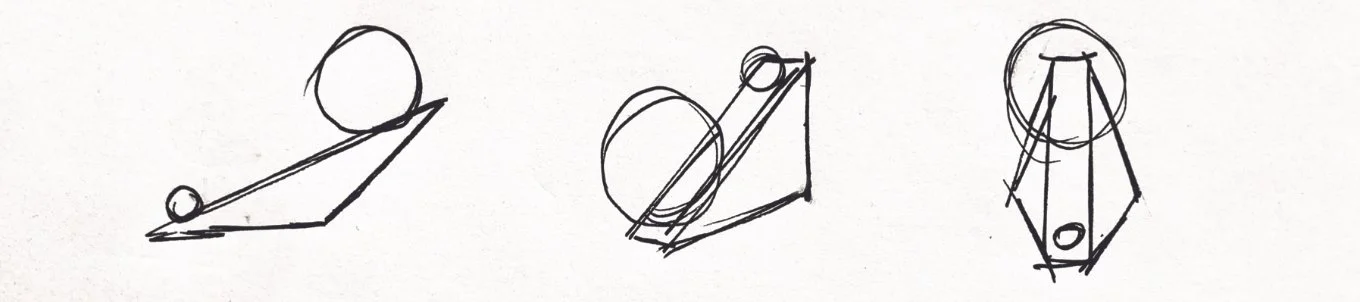
50 Lighting Ideas
TILT began in 2018 as part of Ed’s final major project at Kingston School of Art, during his MA in Product & Furniture Design. At the beginning of the project, he was interested in how light could be experienced in different ways, not just as illumination, but as an object we interact with every day.
Ed explored around 50 different lighting ideas, testing how shape, movement and function could come together to create a more personal relationship between an object and the person using it.
The initial idea for TILT came while Ed was looking for inspiration in the lighting department of a high-end furniture store. He noticed how many beautiful lamps still relied on a corded switch. It is such a small detail, but in everyday life it can become a real frustration, especially when the switch disappears behind a sofa or gets trapped between a bed and the wall.
That made he wonder whether the switch could become part of the experience itself, rather than a separate component hidden away.
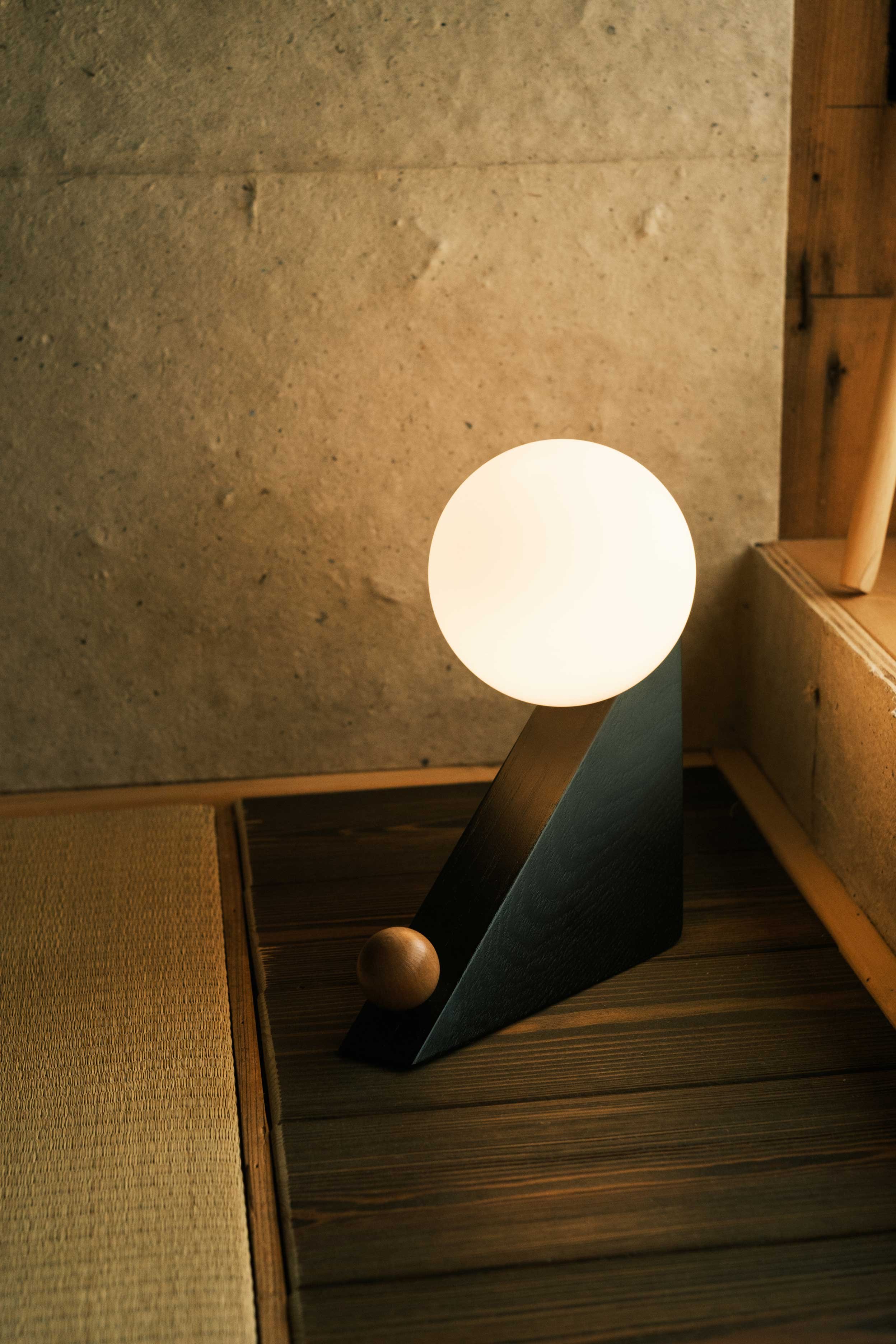
Japanese Influence & Ikigai
Japanese design has influenced Ed for a long time. He remembered being drawn to MUJI from a young age, before he even realised it was a Japanese brand. Later, through studying architecture, he became more aware of Japanese minimalism and the work of designers and architects such as Tadao Ando, where simplicity can still feel deeply emotional and atmospheric.
During his MA, he also read Ikigai by Ken Mogi, which introduced him to the idea of finding joy in small everyday moments. Alongside that, he had many conversations with his classmate Hiro, who is from Japan, about culture, design and different ways of seeing the world. Those ideas gradually found their way into the project.
What interested him most about Ikigai was the idea of making the mundane count. The objects we live with every day can turn simple routines into small rituals. Good design can make those everyday moments feel more considered, intuitive and quietly joyful.
No Switch, Just Tilt
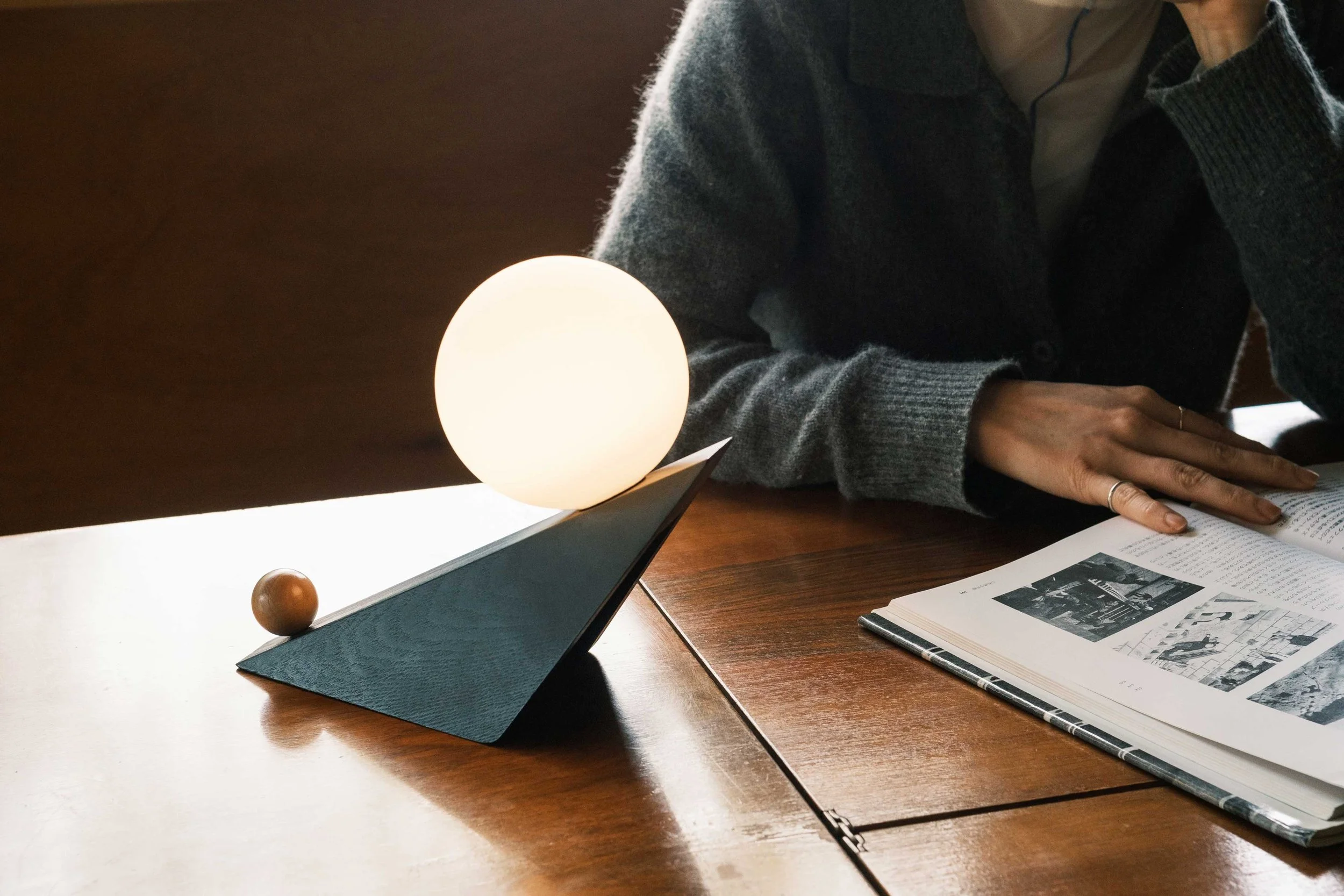
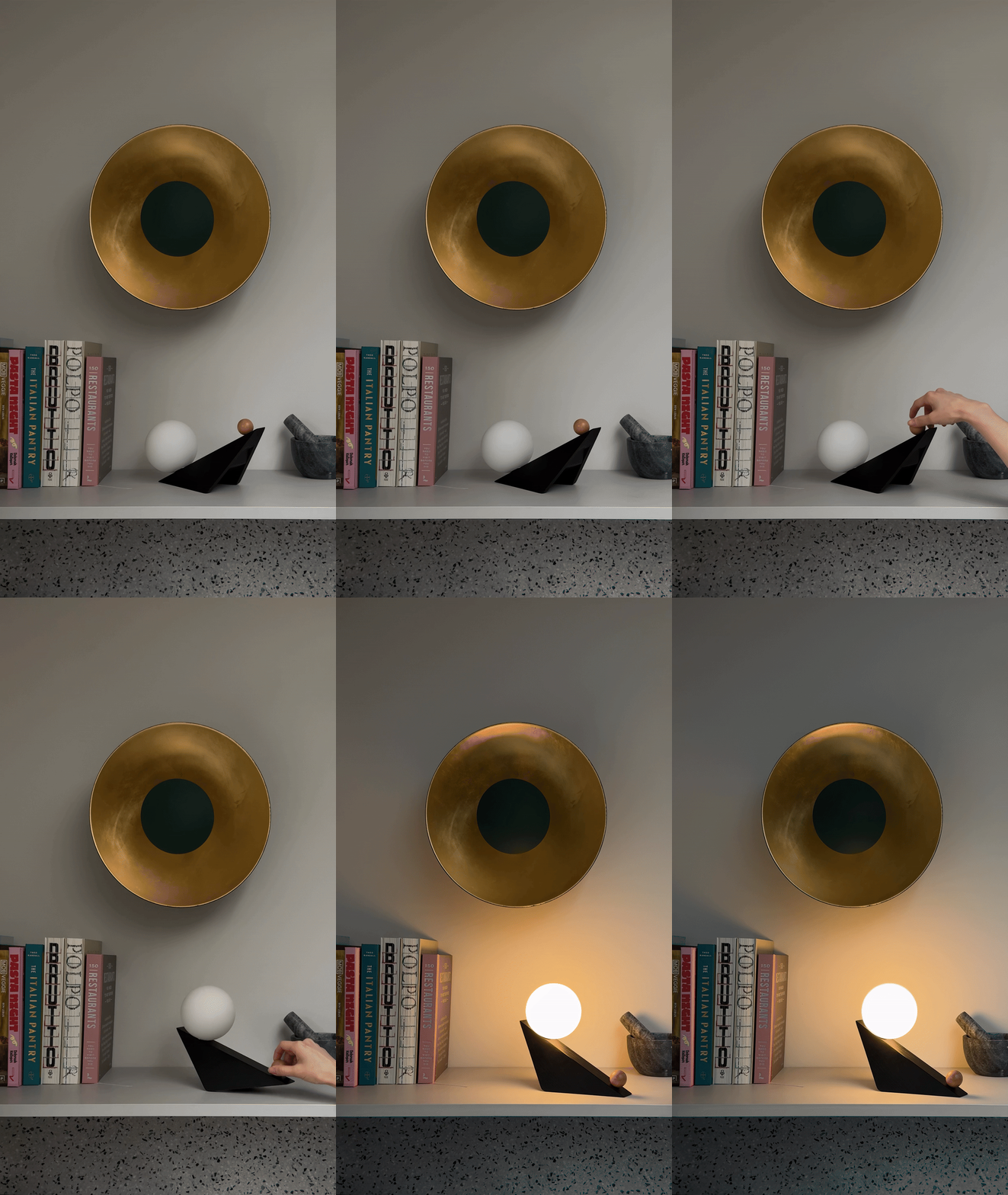
TILT works in a very simple way: to turn it on or off, you gently tilt the lamp. There is no visible switch to find or press. The action of using the lamp is built into the body of the object itself.
What was important to Ed was that TILT should not abandon function for playfulness, but combine the two. It still works as a practical portable lamp, but the way you operate it creates a small moment of interaction. The gesture is intuitive and easy, but also a little unexpected.
Beyond its function, the simple geometric form keeps the object quiet and restrained, while the tilting movement gives it character. In that sense, TILT is both a lamp and a switch, but also a small everyday ritual.
From Prototype to Production
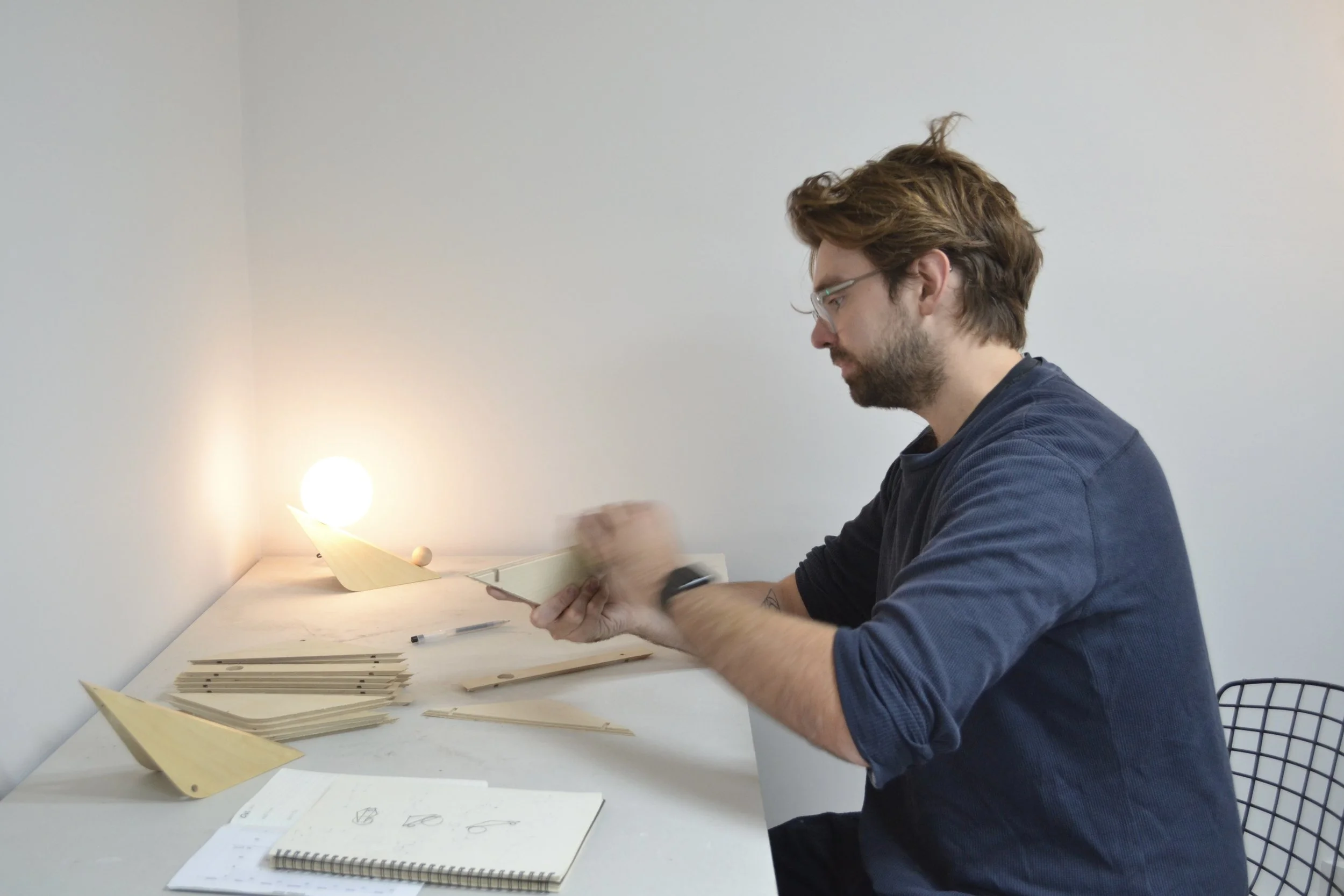
The development of TILT has been a long journey. The first prototype already had the core idea, but it was much more angular and asymmetric, and not really designed for production.
After graduating, Ed spent around a year refining the design, softening the form, improving the balance, and redesigning it so it could realistically be manufactured.
In summer 2021, TILT launched on Kickstarter. Ed made the first 100 lamps by hand in his parents’ dining room. It was a huge amount of work, but also a real moment of validation. Even with almost no marketing budget, people connected with the idea and wanted to support it.
Since then, TILT has been recognised through the LAMP 2020 Professional Table Lamp Award, Dutch Design Week 2022, and the 2023 Etsy Design Award for Lighting, where it was handpicked by Sarah Jessica Parker.
In 2023, we partnered with a manufacturing company and spent over a year refining the product properly. The latest version keeps the same spirit, function and visual language as the original, but has evolved from a corded lamp into a cordless, rechargeable design. This makes it much more versatile, while allowing it to be made to a higher standard, with better materials and a more refined finish.
Building the Studio
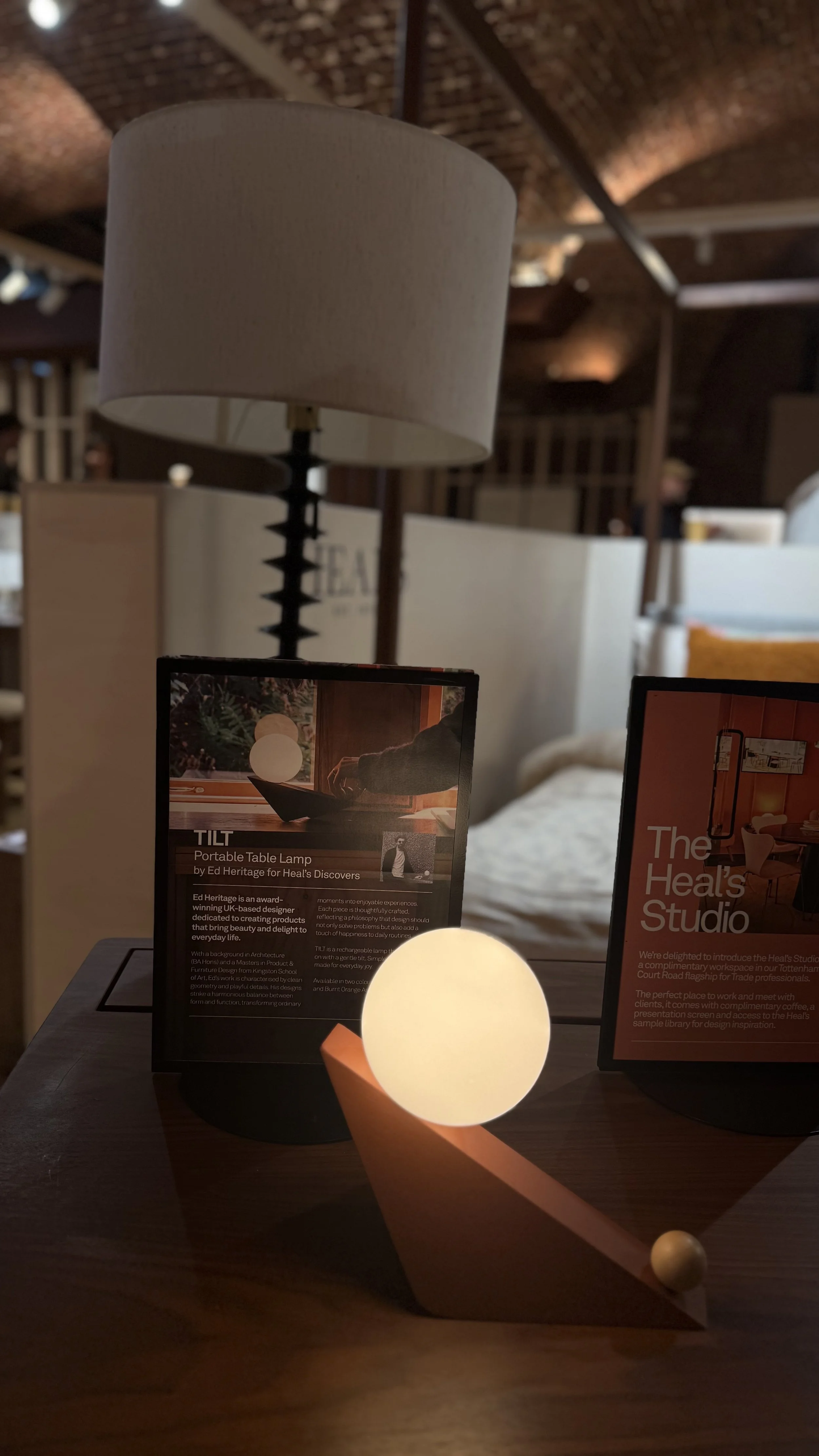
Alongside developing TILT, Ed and his partner have also been building the studio — introducing the lamp to retailers, exhibitions and new audiences. Today, TILT is stocked by Heal’s in the UK and a retailer in Japan, marking an important step for the studio as it continues to grow.
During this journey, Ed also began teaching 3D Design. The experience of taking TILT from prototype through manufacturing, storytelling and retail now feeds directly into what he shares with his students, shaping both his approach as a designer and as an educator.
The Heal’s milestone feels particularly personal. While studying at Kingston, Ed would often pass the Heal’s store nearby and imagine what it might be like to one day see his own work in a design retailer like it. Seeing TILT grow from a university project into a product stocked by Heal’s has made that journey feel somewhat full circle.
Living with TILT
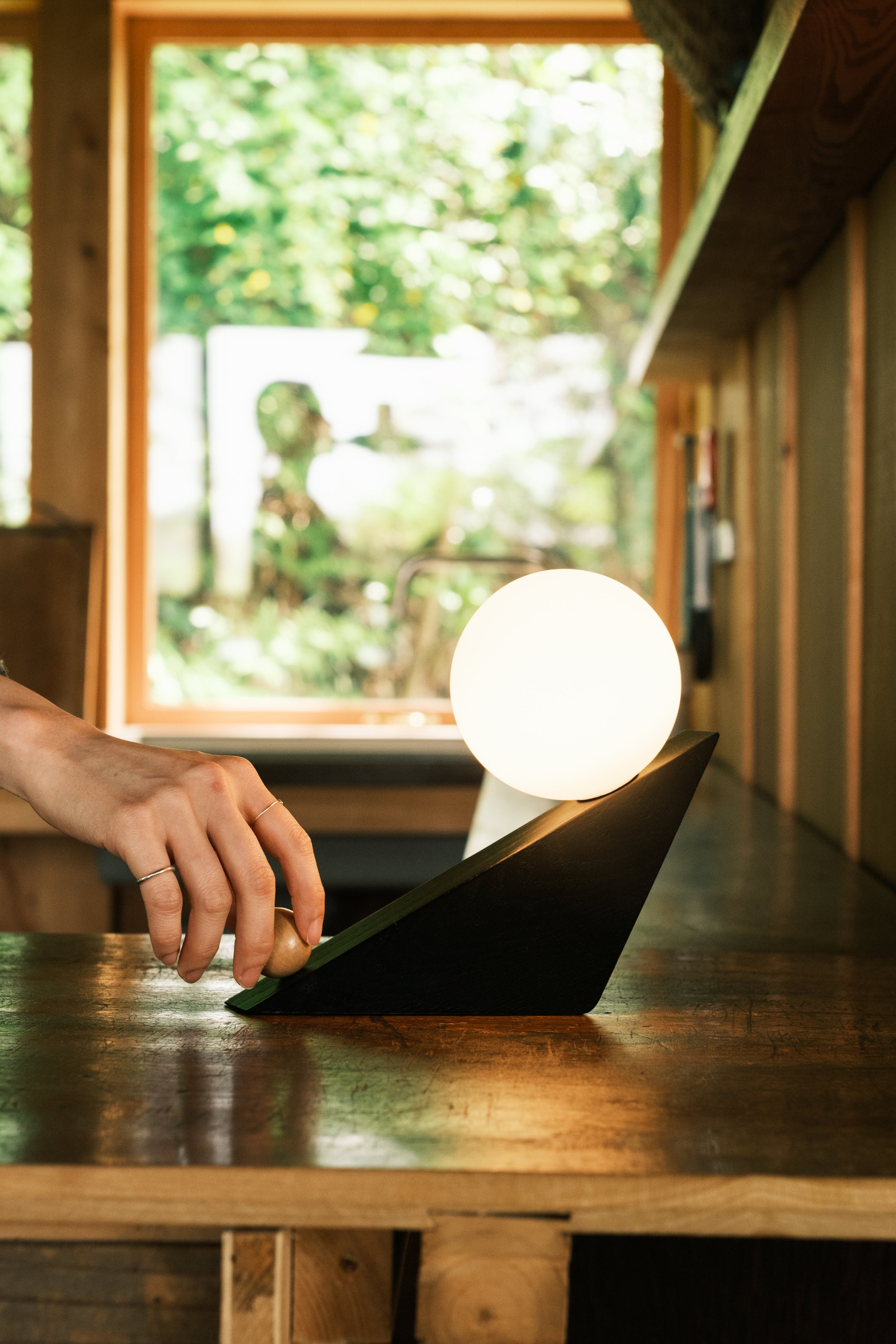
TILT is joy. The first time people interact with it, they usually smile, then turn it on and off another five times. There is something very simple and human about that reaction.
We hope TILT brings a quiet sense of warmth and playfulness into a space. It is not trying to dominate a room, but to create a small moment of delight within it. Turning on a lamp is usually something we do without thinking, but with TILT it becomes a little ritual.
It has taken around eight years from the first concept to where it is today, but each stage has helped shape the lamp into what it has become. And in many ways, it still feels like the beginning.